Charless Place — St. Louis, MO
FARO scanner documentation of the historic Charless Place exterior capturing building geometry and facade conditions for preservation planning.
October 2017
On the banks of the Mississippi River just 5 miles downstream from the historic Gateway Arch stands a much older historic landmark that has provided a home for the elderly citizens of St. Louis since the mid-19th century. Originally named the Home of the Friendless, this impressive multi-room stone mansion was originally established by Antebellum philanthropist Charlotte Charless in 1853. Today, the building is listed on the National Register of Historic Places as the oldest and largest facility in St. Louis to provide a home for elderly women.
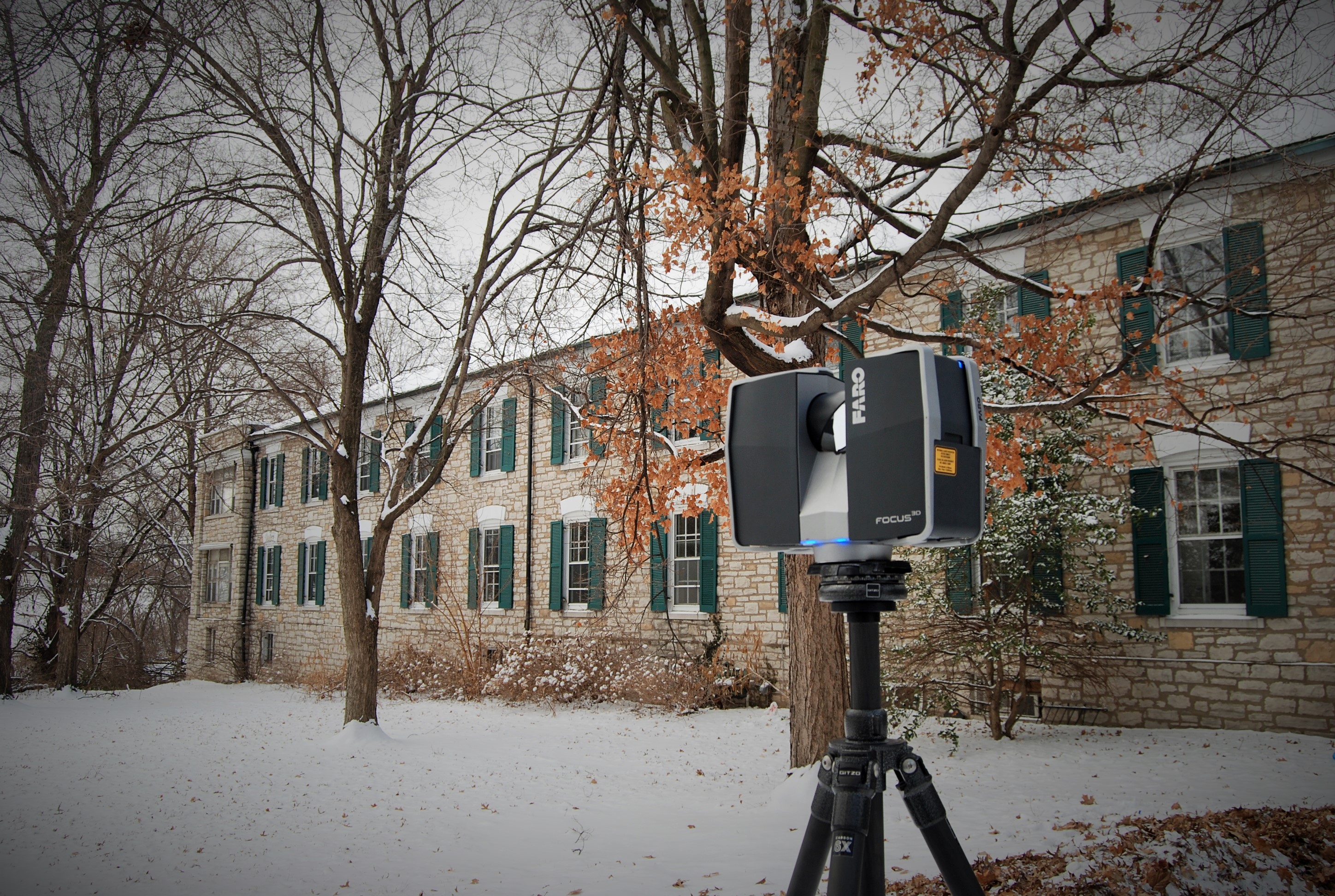
Over the past century, multiple renovations and additions to the original structure have expanded its size and added modern conveniences. Renamed the Charless Place in 1977, the original purpose of the building remained the same. It was eventually forced to close in 2012. Fortunately, through the collaborative efforts of multiple development and preservation partners, this newly renovated, yet historically preserved, Charless Place was reopened in 2017 and continues to offer seniors a modern home with historic charm in the heart of downtown St. Louis.
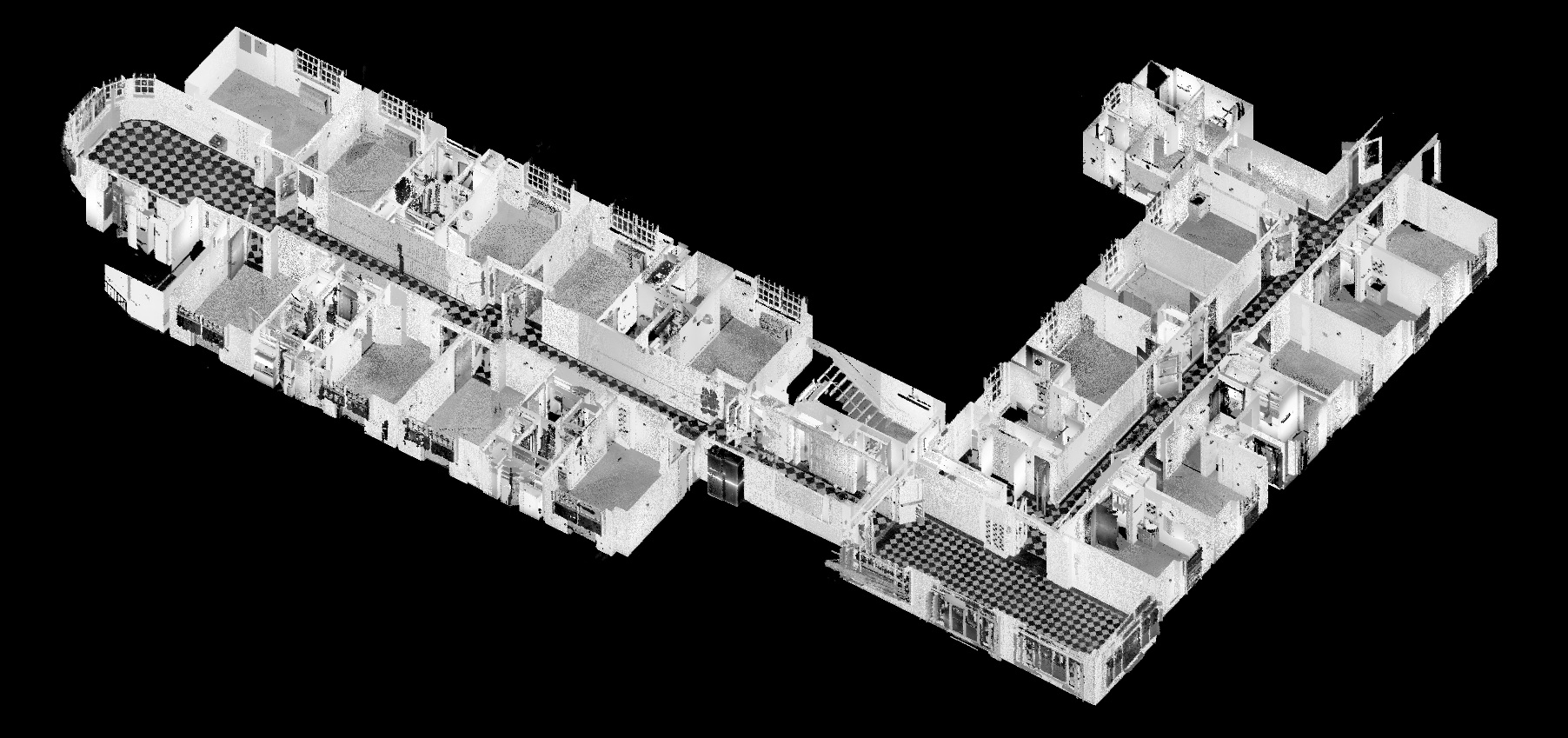
Rogue Visual Design is proud to have been one of the partners in this collaborative renovation team. Our role was to create a precise Revit model of the building as it existed in 2015 that allowed the architectural team to design the renovations more efficiently. To develop the model, our LiDAR specialists spent 3 days collecting over 1,000 separate 3D laser scans of every room and public space in this multi-residence facility. With the data collected, BIM specialists compiled the scans to create an LOD 300 Revit model of the four-story, 121,000 square foot building, delivered to the architectural firm within two weeks.
We are pleased to report that the LOD 300 Revit model we delivered facilitated the overall efficiency and effectiveness of the project. The details we captured would simply not have been possible with traditional documentation methods. With the renovations now complete, our archived digital model now maintains a detailed snapshot in the life of the historic Charless Place and helps to preserve a chapter in the social history of the St. Louis community.